Load balancing across VICIdial servers
Load balancing spreads agent and web traffic across telephony nodes in a VICIdial cluster. Here is what balances, what does not, and where the limits are.
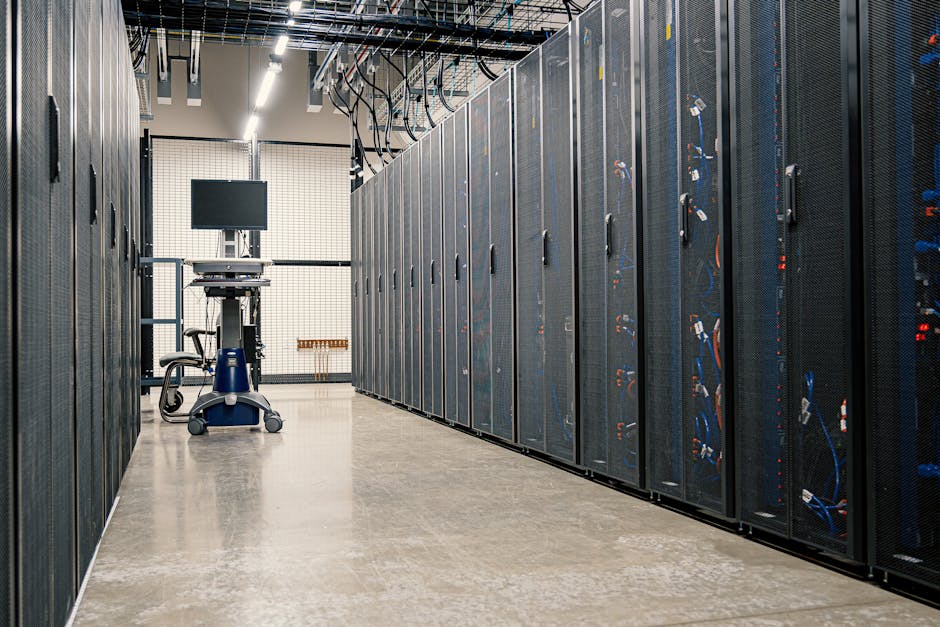
Load balancing in VICIdial is not one switch. The web admin and agent screens balance one way, the dialing capacity balances another, and the live audio does not balance at all the way a stateless web app would. Understanding which is which keeps you from building something that looks balanced and falls over the first time a node dies.
This is a cluster topic. Our managed product runs one customer per box, Single tenant, so think of everything below as a self-host architecture you build when a single dialer runs out of capacity. A single box does not need any of it.
What you actually spread
Three layers, three answers. Web and agent HTTP traffic spreads cleanly behind a reverse proxy across multiple web servers, because every node reads the same shared database. Dialing capacity spreads by running several telephony nodes, each carrying a slice of the agents and a slice of the SIP trunk channels. The shared database itself does not spread across telephony nodes - it is one logical store, usually a dedicated DB box with a replica.
flowchart TD
  U[Agents] --> LB[Reverse proxy]
  LB --> W1[Web node 1]
  LB --> W2[Web node 2]
  W1 --> DB[Shared DB server]
  W2 --> DB
  T1[Telephony node 1] --> DB
  T2[Telephony node 2] --> DB
  CAR[Carrier] --> T1
  CAR --> T2
The web tier
Put a reverse proxy in front of two or more web nodes and round-robin agent logins across them. Because VICIdial state lives in the shared database, not in node memory, an agent on web node one and an agent on web node two see the same campaigns and leads. Health checks pull a dead node out of rotation. This is the part of VICIdial that behaves like a normal stateless web app.
The telephony tier
Audio is stateful. An active call lives on the specific Asterisk instance that set it up, and you cannot move a live RTP stream mid-call to another node. So you balance by assignment, not by proxy: you place agents and their campaigns onto specific telephony nodes, and you split your dial channels across nodes through the Server trunk entries so no single box carries every call. The Carrier points DIDs and outbound routes at multiple node IPs. The Keepalive processes on each node keep its own dialer running. There is no magic that auto-rebalances live calls.
If a telephony node dies, its active calls drop and its agents reconnect to a surviving node. That is the Failover story for voice, and it is honest to plan around it rather than pretend live calls survive a node loss. The single server versus cluster post covers when the added complexity is worth it, and the VICIdial install guide shows the full multi-box layout.
When a single box wins
A single well-sized box handles a surprising number of agents before any of this matters, and it removes an entire category of failure modes: no proxy to misconfigure, no node-to-node clock drift, no split-brain risk in the DB layer. VICIfast provisions a Single tenant box in under 40 seconds, and if you genuinely outgrow it you keep root SSH to build a cluster yourself. Reach for load balancing when you have measured the ceiling, not before.
Scale the box first, then scale out. Check server sizes on our pricing page to see how far a single box gets you before a cluster is on the table.
Related from VICIfast
About VICIfast
We run VICIdial servers for call centres, so you don’t have to. You get the dialer set up, secured and kept running — we handle the server, the updates and the backups. Bring your own phone carrier at no markup, or use VICIfast Voice, our own US calling and numbers, from $0.0085 a minute. From $49 a month per server.
Questions? Call +1 636 556 0022 and talk to someone who runs dialers.
Citing this article
VICIfast Engineering. “Load balancing across VICIdial servers”. VICIfast LLC, June 29, 2026. Retrieved from https://vicifast.com/blog/vicidial-load-balancer-setup
Have questions?
Related posts




You might be interested in




VICIfast newsletter
Liked this? Get the next one in your inbox.
We ship the kind of stuff you just read - concrete, numbers-first, no drip. One email when a new post goes live. Unsubscribe in one click.
Comments
No comments yet - be the first.