Agent Search Method Override for in-groups
This in-group setting decides whether VICIdial looks for an answering agent across all your servers or just the one where the call landed. The wrong choice can quietly raise your dropped calls.
Agent Search Method Override is one of those settings that looks harmless and is safe to ignore until it is not. It only matters once you have more than one server, but when it matters it can quietly cost you answered calls. Here is what it does and why the safe default is usually to leave it alone.
The question it answers
flowchart TD
    A[Inbound call needs agent] --> B[Agent Search Method Override]
    B --> C{Which method?}
    C -->|LOCAL ONLY| D[Search agents on landing server]
    C -->|ALL SERVERS| E[Search agents across cluster]
    D --> F{Agent found?}
    E --> G{Agent found?}
    F -->|No| H[Risk of dropped call]
    F -->|Yes| I[Connect]
    G -->|Yes| I
    G -->|No| H
When a call is answered and needs to be handed to a live person, VICIdial has to go find an available agent. If your whole operation runs on a single server, the answer is obvious: the agent is on that server. But on a multi-server setup, agents might be spread across boxes. This setting tells the in-group where to look.
It is an override. Normally the dialplan has its own agent search behavior. This field lets you force one method just for this Ingroup, ignoring the dialplan default. Leave it blank and the dialplan decides.
LB versus SO
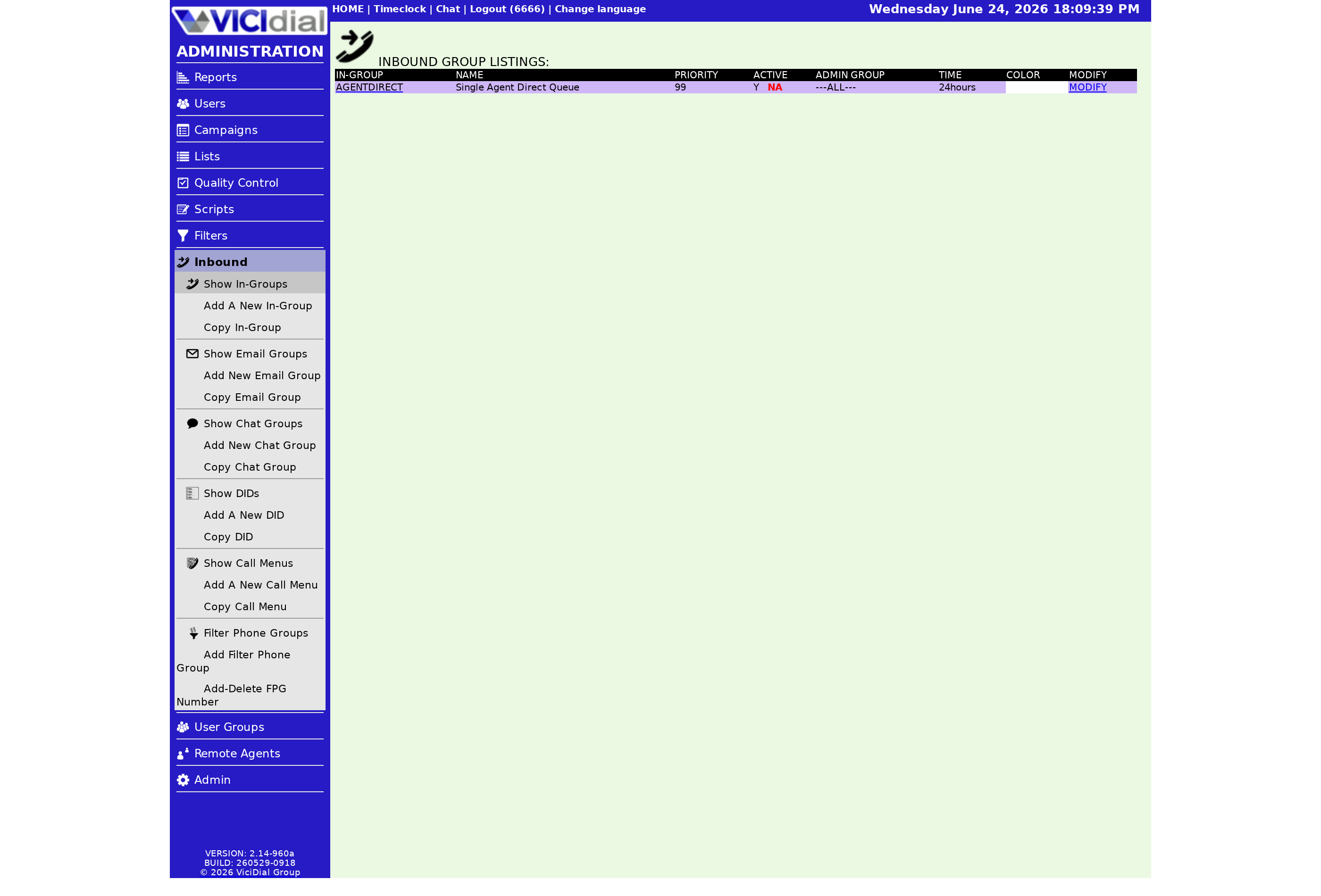
There are two values:
- LB: search for the next available Agent on any server in the system to receive the answered call. This casts the widest net and keeps idle agents anywhere from going to waste.
- SO: search only on the originating server, the box where the call landed. Agents on other servers are not considered, even if they are free.
The default is blank, which means no override and the dialplan's own method applies. For most people that is the right answer.
Why SO is the risky one
Setting this to SO can raise your dropped-call count, sometimes a lot. The reason is simple: if the only free agents happen to be on a different server, SO refuses to use them, so the caller waits with no one to answer and may eventually drop. On a setup with calls and agents spread across boxes, that is a real and avoidable loss. Watch your Status (lead status) reports and your Drop rate if you do enable it.
There are narrow cases for SO, usually around keeping a call on the same box for latency, recording, or a Remote agent arrangement. But unless you have a clear reason, the conservative choice protects your answer rate.
A simple rule of thumb
Single server? This setting does not matter; leave it blank. Multiple servers and you want every free agent used? Leave it blank or use LB. Multiple servers and you have a specific reason to keep a call local? Use SO and keep a close eye on drops. When in doubt, blank is the safe answer. For the wider routing picture see the inbound call handling guide, and if calls are arriving but not reaching anyone, this troubleshooting guide is the place to start.
Most teams never touch a multi-server setup, and on our single-tenant managed hosting your agents live on one box, so this setting stays comfortably blank.
Frequently asked
- Usually no. SO limits the search to the server where the call landed, which can leave free agents on other servers idle and push more calls into a dropped state. Leave it blank to use the dialplan default unless you have a specific single-server reason.
- LB searches for an available agent on any server in the system to receive the answered call. SO searches only on the originating server. LB casts a wider net; SO stays local but risks more drops on a multi-server setup.
› Should I set Agent Search Method Override to SO?
› What is the difference between LB and SO?
Related from VICIfast
About VICIfast
We run VICIdial servers for call centres, so you don’t have to. You get the dialer set up, secured and kept running — we handle the server, the updates and the backups. Bring your own phone carrier; we never resell minutes. From $49 a month per server.
Questions? Call +1 636 556 0022 and talk to someone who runs dialers.
Citing this article
VICIfast Engineering. “Agent Search Method Override for in-groups”. VICIfast LLC, June 19, 2026. Retrieved from https://vicifast.com/blog/vicidial-ingroup-agent-search-method
Have questions?
Related posts

You might be interested in
VICIfast newsletter
Liked this? Get the next one in your inbox.
We ship the kind of stuff you just read - concrete, numbers-first, no drip. One email when a new post goes live. Unsubscribe in one click.
Comments
No comments yet - be the first.