The inbound_man dial method explained
INBOUND_MAN lets one agent place manual outbound calls and still catch inbound calls in between. Here is what it does, why dial level must be 1.0, and when to use it.
INBOUND_MAN is the Dial method for an Agent who needs to do two jobs at once: make outbound calls by hand and still be available to answer inbound calls when they come in. It is a tidy middle ground - a form of Blended dialing work - but it behaves differently from the predictive methods, and a couple of its settings trip people up the first time. Here is the plain-English version.
What it does
sequenceDiagram
    participant Ag as Agent
    participant V as VICIdial
    participant O as Outbound lead
    participant I as Inbound caller
    Note over V: Dial Level fixed at 1.0
    Ag->>V: Place manual outbound call
    V->>O: Dial one line
    O-->>Ag: Talk / disposition
    I->>V: Inbound call arrives
    V->>Ag: Route between manual calls
    Ag->>I: Handle inbound
With INBOUND_MAN, an agent places manual outbound calls from a campaign's lead list - clicking to dial each number - while remaining able to take inbound calls between those dials. So an agent works a list of callbacks or warm follow-ups, and whenever an inbound call lands in their inbound group, the system routes it to them instead of forcing them to choose one mode or the other.
This is a flavor of blended work, but it is specifically manual on the outbound side. There is no predictive pacing, no ratio of lines per agent climbing in the background, and no risk of the dialer over-calling and dropping someone. The agent is in control of every outbound dial, which is part of why this method appeals to teams that handle sensitive conversations or need an audit trail of who dialed what and when.
The dial level gotcha
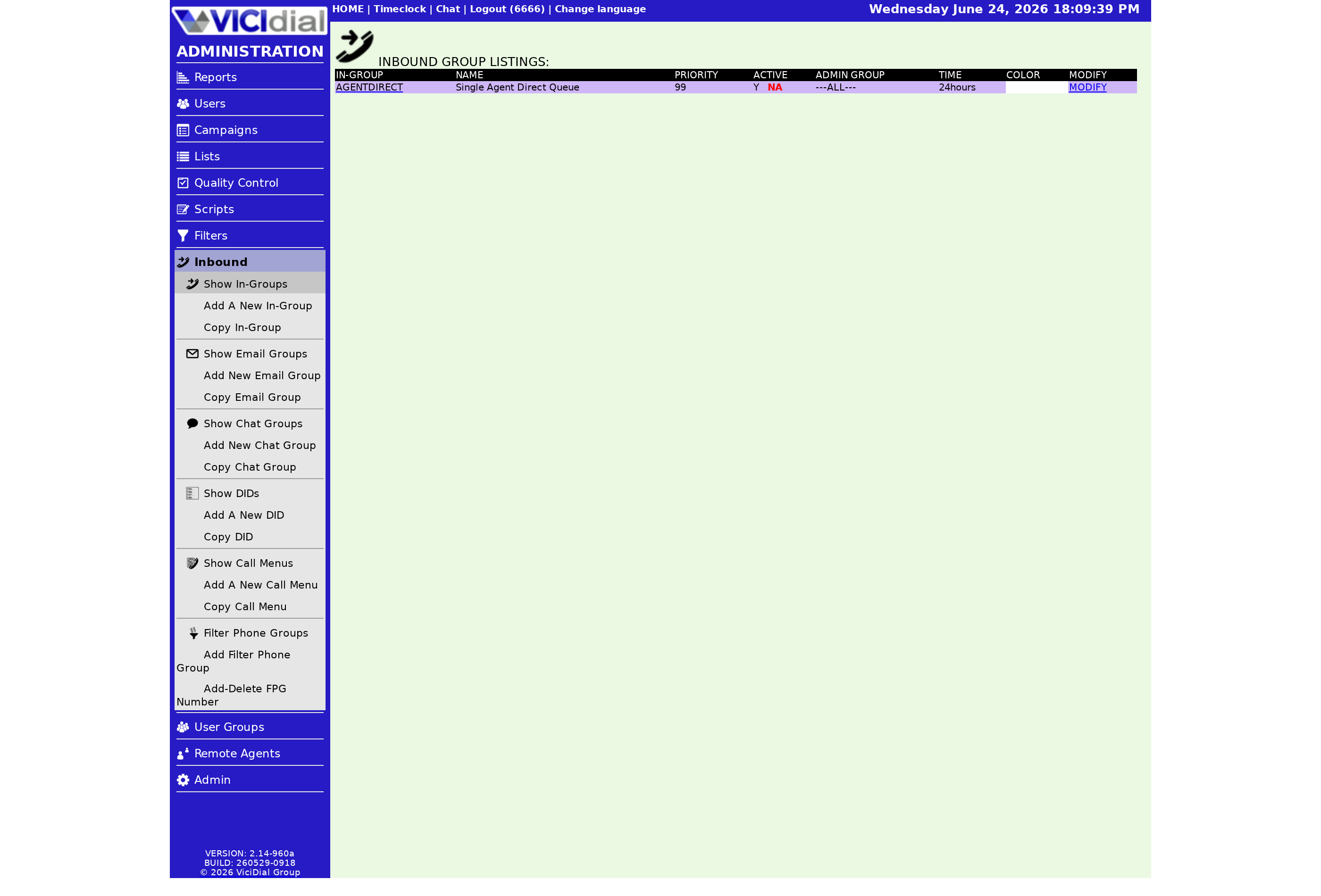
Here is the setting that confuses everyone. With INBOUND_MAN you set the auto dial level to 1.0 - not zero. That sounds like it should turn auto-dialing on, but it does not. The 1.0 is what keeps each agent able to receive inbound calls. Even with the dial level above zero, the campaign places no automatic outbound calls. Agents still dial every outbound number themselves.
Think of the dial level here as 'how many inbound calls can route to this agent at once,' not 'how hard to auto-dial.' That mental swap clears up most of the confusion.
Keeping agents ready for inbound
There is a useful guardrail called Inbound Manual Dial Agent Forced Ready Seconds. Set it above zero and an agent must sit in the READY state - actually available for an inbound call - for that many seconds before the Dial Next Number button will let them place another outbound dial. It stops agents from chaining outbound calls back to back and never being free when inbound traffic arrives. You can even override that wait by day and time using a settings container if your inbound volume swings across the week.
When to reach for it
INBOUND_MAN suits small teams who handle a customer-service or callback line and also need to make a steady trickle of outbound calls - follow-ups, callbacks, account work - without letting an inbound call ring out. It is not the tool for high-volume outbound; for that you want a predictive method covered in our dialing strategies guide, and if you are deciding between pure manual and this blended approach, the trade-offs in when to use manual dialing will help.
Running a blended outbound-plus-inbound desk needs a box that can carry both sides cleanly - see what each plan includes on the pricing page.
Frequently asked
- No. Even with the dial level set above zero, no automatic outbound calls are placed. Agents click Dial Next Number to place each outbound call themselves; the dialer only routes inbound calls to them in between.
- Setting it to 1.0 keeps each agent able to receive one inbound call. It does not turn on auto-dialing - it just keeps the inbound side working while manual outbound dialing happens by hand.
› Does INBOUND_MAN auto-dial at all?
› Why must the dial level be 1.0?
Related from VICIfast
About VICIfast
We run VICIdial servers for call centres, so you don’t have to. You get the dialer set up, secured and kept running — we handle the server, the updates and the backups. Bring your own phone carrier; we never resell minutes. From $49 a month per server.
Questions? Call +1 636 556 0022 and talk to someone who runs dialers.
Citing this article
VICIfast Engineering. “The inbound_man dial method explained”. VICIfast LLC, June 17, 2026. Retrieved from https://vicifast.com/blog/vicidial-inbound-man-dial-method
Have questions?
Related posts
You might be interested in
VICIfast newsletter
Liked this? Get the next one in your inbox.
We ship the kind of stuff you just read - concrete, numbers-first, no drip. One email when a new post goes live. Unsubscribe in one click.
Comments
No comments yet - be the first.