How many Asterisk channels can your server carry at once?
The number of simultaneous Asterisk channels a VICIdial server can handle depends on CPU cores, codec choice, and dial ratio - not a fixed setting. This post explains what drives concurrent channel capacity and how to find your real ceiling.
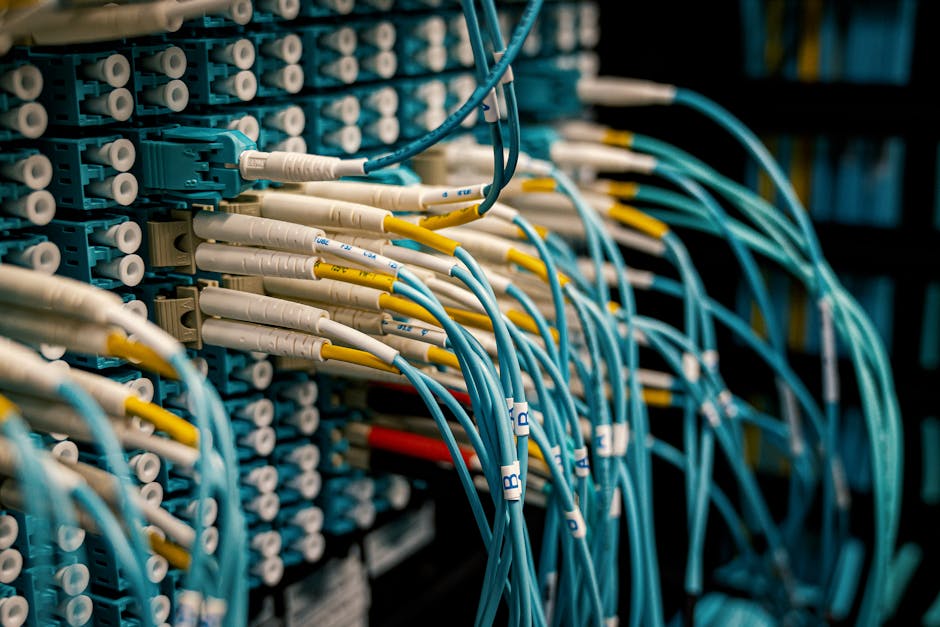
Every active call leg in VICIdial occupies an Asterisk Channel. A ringing outbound attempt is a channel. A connected call bridged to an agent is two channels - one for the caller and one for the agent. A Three-way call is three. The question of how many channels your box can carry at once comes down to how much CPU Asterisk can consume before the scheduler falls behind and audio quality suffers.
What uses CPU per channel
The dominant per-channel cost is audio processing. If your Carrier delivers audio in G.711 codec (alaw or ulaw), Asterisk can pass the audio through with minimal transcoding work - often just mixing frames and forwarding. If your carrier delivers G.729 codec, Asterisk must decode that compressed audio before it can do anything with it, and re-encode it if the destination expects something different. Transcoding is measurably more expensive per channel than native passthrough.
Beyond audio, each channel has SIP signaling overhead - OPTIONS keepalives, re-INVITEs, BYE processing - and a row in Asterisk's internal channel list that the VICIdial AMI connection polls to track call state. The AMI (Asterisk Manager Interface) (Asterisk Manager Interface) connection itself adds a small but real polling load proportional to the number of channels in use.
How dial ratio drives channel count
In Predictive dialing, the [[dial-level]] directly multiplies your channel count. With 50 available agents and a dial level of 3.0, the system tries to keep roughly 150 outbound lines in flight at once. Each ringing line is a channel. When one answers and bridges to an agent, the ringing channel becomes a bridged pair - so briefly you can have even more channels open than the steady-state estimate suggests, as new dials start before old calls fully close.
Ratio dialing is more predictable - the ratio is fixed rather than auto-adjusted - but the relationship between agents and channels is the same. More agents plus a higher ratio equals more Concurrent calls equals more Asterisk channels equals more CPU.
Finding your real channel ceiling
flowchart LR
  A["Check Max System Stats report"] --> B["Find Most Concurrent Calls - busiest day"]
  B --> C["Compare to Server Performance peak load"]
  C --> D{"Load was below core count?"}
  D -->|Yes| E["Headroom exists - channels not the bottleneck yet"]
  D -->|No| F["[[channel]] count hit the CPU ceiling"]
  F --> G{"Add cores or reduce dial level?"}
  G -->|Add cores| H["Resize [[vps]] upward"]
  G -->|Reduce dial level| I["Lower [[dial-level]] to reduce channel demand"]
The Maximum System Stats report shows the highest concurrent call count for each of the last 30 days. Cross-reference that peak with the Server Performance Report for the same day. If the peak channel count occurred when system load was well below your core count, you have channel headroom. If load was pinned at or above your core count during that same window, your channel count hit the CPU ceiling and that is your real limit under current conditions.
Practical guidance by server size
As a rough starting estimate, a single CPU core running Asterisk with g711 audio and no transcoding can typically handle somewhere around 30 to 50 bridged channels before load becomes a constraint. With g729 transcoding active, that number drops significantly - sometimes to half or less depending on the hardware. A Single tenant VPS with 4 dedicated cores therefore has headroom for roughly 120 to 200 simultaneous g711 channels at comfortable load, or significantly fewer if transcoding is heavy. These are starting estimates - your actual number depends on the specific hardware, the call mix, and whether other processes on the box are competing for CPU. Disk I/O is often overlooked: if the box is recording calls to local storage at the same time, the write workload reduces the headroom available for audio processing, so factor in your Call recording volume when sizing.
For the full monitoring routine to track channel counts over time, start with the server health and capacity guide. For a closer look at how average channel usage appears in the performance report, see VICIdial average channels in use explained.
If you want a managed box with the right channel headroom already sized in, see VICIfast pricing - each plan tier is sized for a specific concurrent channel range and you can resize from the admin panel without reprovisioning.
Related from VICIfast
About VICIfast
We run VICIdial servers for call centres, so you don’t have to. You get the dialer set up, secured and kept running — we handle the server, the updates and the backups. Bring your own phone carrier at no markup, or use VICIfast Voice, our own US calling and numbers, from $0.0085 a minute. From $49 a month per server.
Questions? Call +1 636 556 0022 and talk to someone who runs dialers.
Citing this article
VICIfast Engineering. “How many Asterisk channels can your server carry at once?”. VICIfast LLC, June 28, 2026. Retrieved from https://vicifast.com/blog/how-many-channels-per-vicidial-server
Have questions?
You might be interested in



VICIfast newsletter
Liked this? Get the next one in your inbox.
We ship the kind of stuff you just read - concrete, numbers-first, no drip. One email when a new post goes live. Unsubscribe in one click.
Comments
No comments yet - be the first.