Keeping carrier latency low from the cloud
Cloud region placement has a direct effect on RTP path length and call quality - here is how to reduce carrier latency for your VICIdial box.
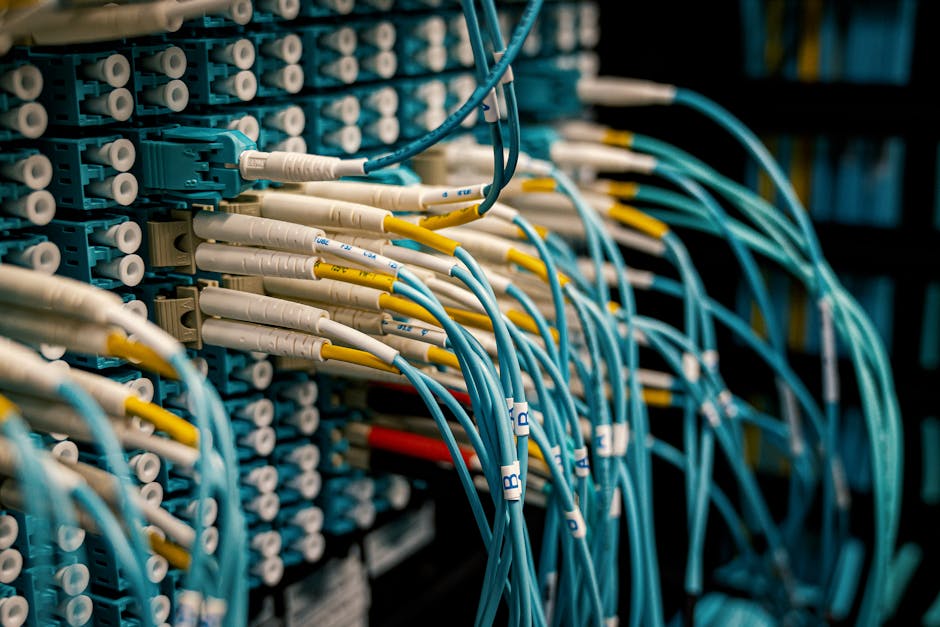
When you move a VICIdial box from a rack in your office to a cloud server, every audio packet starts travelling a longer path. The distance between your cloud server and your carrier's media gateways determines how much delay your callers hear. Get that distance wrong and call quality suffers from the first day, even if your internet connection looks fine on a speed test.
This guide walks through why cloud latency affects voice calls more than web traffic, how to measure it before you commit to a region, and what to tune on the box itself. For a broader overview of cloud VICIdial deployments, see running VICIdial in the cloud.
Why voice is unforgiving about delay
Web pages and API calls tolerate a few hundred milliseconds of delay without anyone noticing. Voice cannot. RTP, the Real-time Transport Protocol RTP that carries audio between your dialer, your carrier, and your caller, has no retry mechanism. Packets either arrive on time or they are discarded. When packets arrive late or out of order, the listener hears that as jitter - a rapid, choppy variation in loudness and timing Jitter. When packets are lost entirely, voices cut out Packet loss.
Latency, the one-way propagation delay between two endpoints Latency, above 150 ms starts making conversation feel slightly off. Above 250 ms it becomes noticeably awkward because speakers start talking over each other. A MOS (Mean Opinion Score MOS (mean opinion score)) below 3.5 on a five-point scale is where callers typically complain or hang up early.
The path an audio packet travels
sequenceDiagram
  participant A as Agent browser
  participant B as VICIdial box
  participant C as Carrier media gateway
  participant D as Callee phone
  A->>B: SIP INVITE
  B->>C: SIP INVITE via trunk
  C->>D: PSTN call setup
  D-->>C: call answered
  C-->>B: RTP audio stream
  B-->>A: RTP to agent softphone
  Note over B,C: latency here = cloud region vs carrier DC
The round-trip audio path is: agent softphone to your cloud box, then your cloud box to the carrier's media gateway, then across the PSTN to the callee. The leg between your cloud box and the carrier's media gateway is the only leg you can meaningfully control by choosing where you deploy. The carrier leg and the PSTN leg are fixed.
Finding your carrier's closest data center
Before you spin up a cloud server, ping your carrier's SIP proxy hostname from a few cloud regions. Most carriers publish their SIP proxy addresses in their onboarding portal. Spin up a small trial instance in each candidate region, run ping -c 50 <carrier-sip-proxy> and note average and maximum round-trip times. Also run a short mtr trace to see whether any intermediate hop is adding disproportionate delay. Pick the region where the average ping is lowest and the maximum is not dramatically higher than the average.
Tuning the box to tolerate remaining delay
Even in a well-chosen region you will see some variation. Asterisk's jitter buffer smooths out short-term packet timing variation. In rtp.conf, set dtmftimeout conservatively and make sure the RTP port range you expose on the firewall is wide enough for your concurrent call volume. A common mistake is opening only a small port block, which causes Asterisk to reuse ports and corrupt audio on busy campaigns.
Codec choice also matters. G.711 G.711 codec sends audio at 64 Kbps uncompressed and has almost no algorithmic delay. G.729 G.729 codec compresses to 8 Kbps but adds 10–30 ms of codec delay on each end. On a low-latency path the difference is negligible. On a path already at 100 ms, adding another 30 ms per end brings you close to the perceptible threshold. Prefer G.711 unless bandwidth is genuinely constrained.
Agents also contribute to the path
If your agents are in a call center in one country and your cloud box is in another, the agent-to-box leg adds its own delay on top of the box-to-carrier leg. Choosing a region that is geographically central between your agent pool and your carrier's gateway gives you the best combined result. There is no single right answer - measure both legs, then optimize for the sum. For notes on how region choice interacts with data residency and cost, see choosing a cloud region for your dialer.
Managing region selection, firewall rules, and Asterisk tuning yourself takes time. If you would rather skip straight to making calls, VICIfast plans provision a fully configured VICIdial box in under 40 seconds, with the RTP port range open and Asterisk pre-tuned.
Related from VICIfast
About VICIfast
We run VICIdial servers for call centres, so you don’t have to. You get the dialer set up, secured and kept running — we handle the server, the updates and the backups. Bring your own phone carrier at no markup, or use VICIfast Voice, our own US calling and numbers, from $0.0085 a minute. From $49 a month per server.
Questions? Call +1 636 556 0022 and talk to someone who runs dialers.
Citing this article
VICIfast Engineering. “Keeping carrier latency low from the cloud”. VICIfast LLC, June 29, 2026. Retrieved from https://vicifast.com/blog/vicidial-cloud-latency-carrier
Have questions?
Related posts



You might be interested in

VICIfast newsletter
Liked this? Get the next one in your inbox.
We ship the kind of stuff you just read - concrete, numbers-first, no drip. One email when a new post goes live. Unsubscribe in one click.
Comments
No comments yet - be the first.